Contact: Mr. Wang
Telephone:18819029672
Email: dy012@dm-robot.com
Website: www.xdm-robot.com/
Address: No. 5, Baihao Taikang Street, Houjie Town, Dongguan City, Guangdong Province
A linear motor is a transmission device that directly converts electrical energy into linear motion mechanical energy without any central conversion arrangement.The linear motor module can be regarded as a rotating motor, cutting the radial, vibrating the voice coil motor, and unfolding it into a plane. The variations evolved from the stator are called the main stator, and the variations evolved from the rotor are called the secondary stator. In practice, primary and non-essential are manufactured to different lengths to ensure that primary and non-essential coupling remains stable at the required stroke scale.
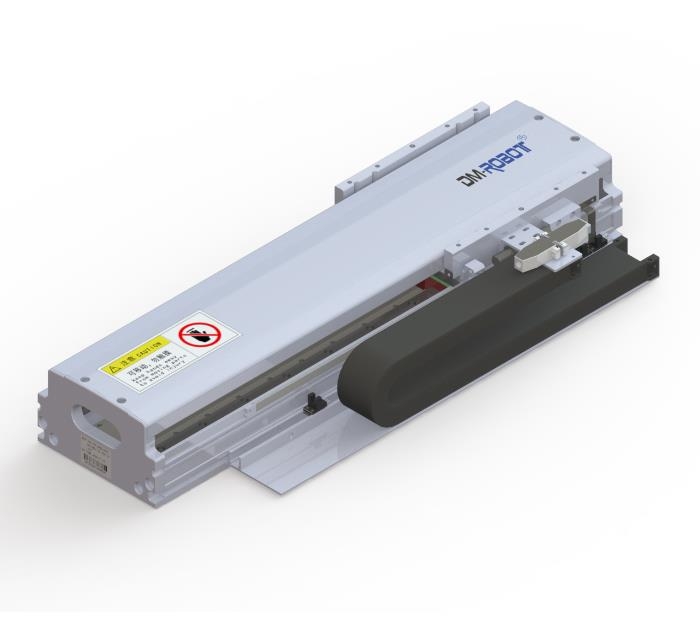
The linear motor module can be a short main power supply or a long auxiliary power supply. Taking the manufacturing cost and operating expenses into consideration, taking the linear induction motor as an example, when the primary winding is connected to the communication power supply, a traveling wave magnetic field is generated in the air gap. When the secondary traveling wave magnetic field is blocked, an electromotive force will be generated and a current will be generated. The current acts with the magnetic field in the air gap, producing electromagnetic thrust. If the main rod is fixed, the secondary rod moves in a straight line under the action of thrust. On the contrary, beginners' movements are straight. A linear motor usage system not only has a linear motor with good functions, but also has a control system that can meet technical and economic requirements under safe and reliable conditions. With the development of automatic control technology and microcomputer technology, there are more and more control methods for linear motors.
The research on linear motor module control technology can be divided into three aspects: traditional control technology, modern control technology and intelligent control technology. Traditional control technologies such as PID response control wide and coupling control have been widely used in communication servo systems. PID control contains information during dynamic control and is highly robust. It is the fundamental control method for communicating the servo motor drive system. Linear motor

Tel: +86 18819029672
Add: A801-004, Tian'an International Building, No.3012,
Renmin South Road, Jiabei Community, Nanhu Street,
Luohu District, Shenzhen, China.