Contact: Mr. Wang
Telephone:18819029672
Email: dy012@dm-robot.com
Website: www.xdm-robot.com/
Address: No. 5, Baihao Taikang Street, Houjie Town, Dongguan City, Guangdong Province
Linear modules are generally divided into two types, one is the ball screw module and the other is the synchronous belt module . Both of these have their own unique functions. Depending on the stroke, the accuracy, load, speed and configurations adopted will be different.
Straight belt module
The linear module of the synchronization belt is a linear transmission device composed of the synchronization belt and the synchronization pulley . It has a wide range of applications, convenient equipment, high accuracy, and is endured by a wide range of users.
The belt linear module is mainly composed of belts, linear guide rails , aluminum alloy profiles, bases, workbenches, motor bases, couplings, motors, limit switches and other components. It has fully enclosed and semi-enclosed types, characterized by fast speed and long stroke.
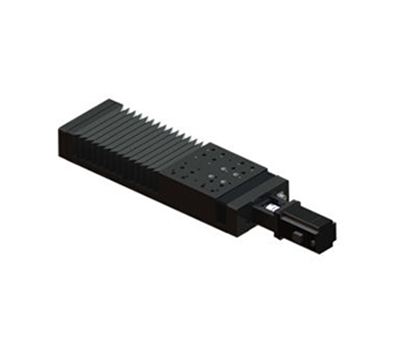
Screw linear module
The linear screw module mainly consists of ball screws , linear guide rails, aluminum alloy profiles, bases, workbenches, couplings, motors, motor bases, limit switches and other components. They are closed and open, and are characterized by high accuracy and short stroke.
The belt module has a longer stroke thanthe screw module , but the belt module is generally used on the X-axis, while the screw module can be used on the Z-axis. The big difference between the screw linear module and the belt linear module is the difference in accuracy. The general accuracy of the screw module can reach at least 4-5 wires, which is suitable for automation equipment that requires high accuracy. The positioning accuracy of belt modules is inferior to that of screw modules, and is suitable for automation equipment with relatively low accuracy requirements such as packaging machinery or printing machinery.

Tel: +86 18819029672
Add: A801-004, Tian'an International Building, No.3012,
Renmin South Road, Jiabei Community, Nanhu Street,
Luohu District, Shenzhen, China.